Have you ever felt like relationships — real, committed ones — carry a particular weight for you that other people don’t seem to feel? Like partnership is something you approach carefully, almost cautiously, while everyone around you seems to fall in and out of love with relative ease? Or maybe the opposite: you’ve thrown yourself into relationships that turned out to be hard work from the very beginning, and you’ve wondered why commitment always seems to come with such serious terms and conditions.
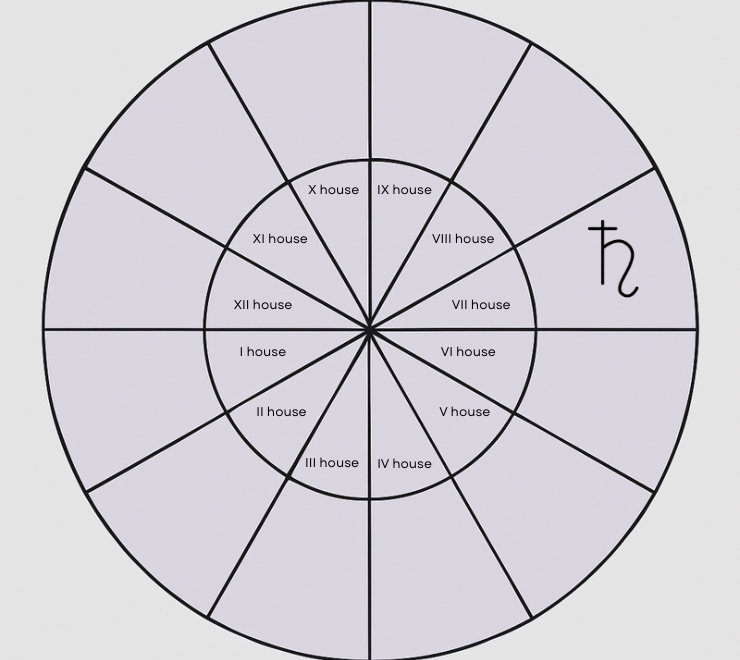
Either way, Saturn in the Seventh House is likely doing a lot of the explaining.
This is one of the most significant relationship placements in astrology — not because it guarantees difficulty, though it does guarantee seriousness — but because it makes partnership one of the central arenas of your life’s work. For better or harder, relationships are where you grow. They are where Saturn hands you your most important lessons. And when you’ve done the work, they are where you find something most people only glimpse: a partnership that is genuinely, durably real.
What Is Saturn in the Seventh House?
Let’s establish what we’re working with.
Saturn is the planet of structure, responsibility, limitation, and long-term mastery. Wherever Saturn sits in your chart, that area of life is governed by serious energy — not as a punishment, but as an invitation to grow in ways that are lasting and meaningful. Saturn doesn’t give things away freely. It asks you to earn what you get, and what you earn under Saturn, you keep.
The Seventh House is the house of partnership in its most committed form. It governs marriage and long-term romantic relationships, but its reach extends beyond romance — it also covers business partnerships, close one-on-one collaborations, and even open enemies or legal opponents. At its core, the Seventh House is about the other: who you choose to align yourself with, what you need from another person to feel complete, and what you bring to a partnership dynamic.
The Seventh House sits directly opposite the First House — the house of self. Where the First is about who you are individually, the Seventh is about who you become in relation to another person. It’s the mirror the world holds up to show you the parts of yourself that only emerge through genuine connection.
Put Saturn in that mirror, and you get a placement that is serious about relationships in a way that goes all the way down.
The Core Themes of Saturn in the Seventh House
The central experience of this placement is one most people with it know intuitively: partnership is not light, easy, or accidental for you. It is chosen, deliberate, and weighted with meaning.
This shows up in a few distinct patterns in the earlier years of life.
Some Saturn in the Seventh House people are late to commit — not because they don’t want connection, but because they sense, correctly, that partnership carries significant consequences for them. They don’t take it lightly. They observe potential partners carefully, perhaps for longer than feels comfortable to those partners. They hold back, test the waters, want to be sure. The result is often that first serious relationships arrive later than peers, or that there are longer periods of deliberate singlehood between relationships.
Others go the opposite route: they commit early and seriously, sometimes to relationships that carry a distinctly Saturn quality from the start — a partner who is older, more established, more reserved, or who brings a noticeable element of challenge, responsibility, or limitation into the dynamic. These relationships often teach enormous lessons, even — especially — when they are difficult.
What both patterns share is the same underlying truth: for Saturn in the Seventh House, relationship is not background music. It is the main event. It is where life gets worked out.
Saturn and the Partner You’re Drawn To
One of the most telling expressions of Saturn in the Seventh House is the type of partner it tends to attract or seek out — at least until the lessons of this placement are more consciously understood.
There is frequently an attraction to partners who embody Saturnian qualities: older, more serious, more established, more reserved. Partners who seem solid, reliable, and capable of providing structure or stability. Sometimes this attraction is healthy — finding genuine emotional maturity and dependability in a partner is a wonderful thing. But sometimes it tips into seeking someone to provide the security or authority that feels missing internally, which can lead to relationships with significant power imbalances or dynamics that feel more like duty than desire.
Saturn in the Seventh House also has a tendency to attract partners who need a great deal from them — partners whose challenges, struggles, or limitations become the organizing principle of the relationship. There can be a pattern of taking on the heavier role in partnership: the responsible one, the provider, the one who holds things together while the other person figures themselves out. This is not always unhealthy, but when it becomes a default, it bears examination.
The deeper work of this placement is recognizing that the qualities Saturn seeks in a partner — stability, maturity, reliability, depth — are qualities it is being asked to develop in itself. The partner is often a mirror, showing Saturn in the Seventh House what it most needs to cultivate internally rather than find externally.
Relationships: The Work and the Reward
For Saturn in the Seventh House, committed relationships require genuine effort — and that is not a flaw in the placement, it is the point.
These individuals tend to take their commitments seriously to a degree that can feel unusual in a culture that often treats relationships as disposable. When they commit, they mean it. They show up. They do the work. They stay through difficulty that would send others toward the exit, because they understand — sometimes instinctively, sometimes through hard experience — that deep partnership is built over time, not discovered fully formed.
This same quality can become a limitation when it leads to staying in relationships long past their natural end — enduring partnerships that are genuinely wrong out of a Saturn-inflected sense of duty, obligation, or fear of failure. Learning to distinguish between healthy commitment and unhealthy endurance is one of the most important lessons this placement offers.
There can also be a guardedness in how intimacy unfolds — a tendency to hold something back, to maintain a degree of emotional distance even within close partnership. This often has roots in a fear of being truly seen and found wanting, or a deep ambivalence about the vulnerability that real closeness requires. The growth edge is trusting that genuine partnership can hold the full weight of who you are, including the parts you’ve been most careful to keep hidden.
The reward for doing this work — really doing it, not just enduring it — is the kind of partnership most people never find: a relationship built on honest foundations, tested by time and difficulty, and chosen again and again with full knowledge of what it costs and what it gives. Saturn in the Seventh House partnerships, when they’re working, are among the most enduring and genuinely satisfying in the zodiac.
Timing: The Late Bloomer in Love
It is worth saying clearly: Saturn in the Seventh House is one of the clearest signatures of the late bloomer in romantic partnership.
This does not mean love is withheld — it means it tends to arrive in its most meaningful form after a period of preparation, maturation, and often some degree of difficulty. The relationships of early adulthood with this placement are frequently the ones that teach rather than the ones that last: partnerships that show clearly what is needed, what doesn’t work, and what genuine compatibility actually requires.
Many Saturn in the Seventh House people find that their most significant and satisfying partnerships begin after thirty — and some after their first Saturn return around age twenty-nine. This timing is not a punishment; it is Saturn’s characteristic insistence that its gifts go to those who are ready to receive them. The readiness has to be earned.
Open Enemies and Legal Matters
The Seventh House governs not only partners but what traditional astrology calls “open enemies” — people who oppose you directly and known to you, as opposed to the hidden adversaries of the Twelfth House. Saturn here can mean that conflicts with others, when they arise, tend to be formal, serious, or protracted. Legal disputes, contractual disagreements, or professional rivalries may play a more significant role in life than they do for most people.
There is also an important lesson here around fairness and justice. Saturn in the Seventh House people tend to have a strong — sometimes rigid — sense of what is fair in a given situation, and they can struggle when outcomes feel unjust. Learning to navigate the fact that fairness is not always the operating principle of the world, and that some battles cost more than they return, is part of this placement’s curriculum.
Career: Partnerships and the Public
The Seventh House’s energy extends into professional partnerships and public-facing roles. Saturn here often produces people who are serious and dependable in one-on-one professional relationships — the ideal business partner, the reliable collaborator, the person who honors contracts and takes professional commitments as seriously as personal ones.
Career paths that suit this placement include law, mediation, diplomacy, counseling, marriage and family therapy, human resources, contract negotiation, and any field built around one-on-one client relationships. These individuals bring Saturn’s characteristic thoroughness and integrity to professional partnerships, and they tend to build reputations over time as people who can genuinely be trusted.
The caution in professional contexts mirrors the personal: the tendency to take on disproportionate responsibility in partnerships, or to remain in professional arrangements that have become limiting out of a sense of obligation, needs to be watched.
Challenges to Watch For
Fear of commitment that masquerades as discernment. There is a real difference between wise caution and avoidance. Saturn in the Seventh House people can become so attuned to everything that could go wrong in a relationship that they never let themselves fully arrive in one. At some point, the risk has to be taken.
Staying too long out of duty. The same seriousness about commitment that is a genuine strength can become a trap when it means enduring relationships that are genuinely wrong because leaving feels like failure. Commitment to a person and commitment to a dynamic that no longer serves are not the same thing.
Unequal partnerships. The pull toward being the responsible, capable one in a partnership can quietly set up dynamics of inequality — where one person does the heavy lifting and the other is allowed to remain less accountable. Saturn in the Seventh House deserves an equal partner, not a project.
Emotional guardedness. Allowing a partner to see the full, unguarded self is the work of a lifetime for this placement. The walls are real and often well-constructed. Building the trust — slowly, carefully — to take them down is worth it.
Projecting Saturn onto partners. There is a tendency to either seek someone who embodies Saturn’s authority and stability, or to unconsciously cast a partner in the role of the critical, demanding voice. Recognizing these projections is essential to genuine partnership.
Quick Tips for Saturn in the Seventh House
- Know the difference between a lesson and a life sentence. Some relationships are meant to teach you something important and then end. That is not failure — it is the design.
- Work on what you seek in others. The qualities you most need in a partner — stability, maturity, reliability — are the qualities Saturn is asking you to build in yourself.
- Let people in incrementally. You don’t have to open all the way at once. But practice moving the wall back, just a little, with people who have earned it.
- Take your time, but take the leap. Wise discernment in choosing a partner is a genuine asset. Indefinite waiting as a form of avoidance is not.
- Have honest conversations about expectations. Saturn in the Seventh House tends to have very clear internal ideas about what partnership should look like. Making those expectations explicit — rather than assuming a partner shares them — saves enormous pain.
- Celebrate your commitment. In a world of casual connection, the ability to take partnership seriously and show up for it over time is something genuinely valuable. Don’t let it become a burden — let it be something you’re proud of.
The Long Game: What Saturn in the Seventh House Builds
Partnership is where Saturn in the Seventh House does its most important work — and the timeline is long, as Saturn’s timelines always are. The early years may bring lessons wrapped in difficulty: relationships that didn’t last, commitments that cost more than they gave, a long search for something that felt genuinely solid.
But the arc bends toward something real.
The Saturn in the Seventh House person who has done the inner work — who has examined what they seek and why, who has learned the difference between healthy commitment and obligatory endurance, who has practiced the vulnerability that real intimacy requires — arrives eventually at a kind of partnership most people only hope for. Not a perfect one. Not an easy one. But a true one: chosen with open eyes, built on honest ground, and capable of lasting because it was never built on anything false.
Saturn rewards those who take its lessons seriously. And in the Seventh House, there is no lesson more serious — or more worth taking — than learning to truly meet another person. To be known, and to stay. To know, and to choose to remain.
That is what Saturn in the Seventh House is building, one hard and honest relationship at a time.
Explore the full Saturn house series at astro-basics.com.